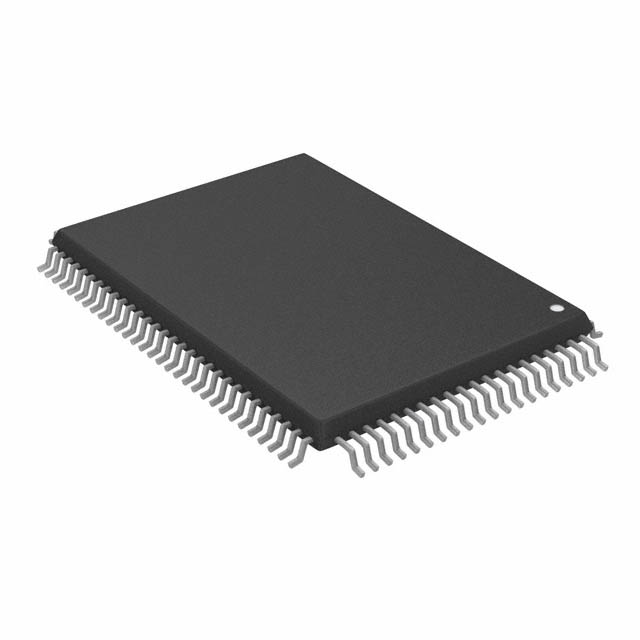
Microcontrollers, compute, artificial intelligence, and data centers all take the headlines and talking points most days. The humble, venerable field-programmable gate arrays (FPGAs) have been keeping pace behind the scenes. No longer just a platform for test and measurement, FPGAs have been making splashes in niche markets. It's time to take a look at them as a viable option for even a final product.
In one of my previous editorials, "Obsolete is Canceled," I speculated on using modern technology to remake any legacy processor. I spoke about it like it was wishful science fiction. Little did I realize that’s exactly what was already happening with FPGAs.
Where would remaking processors have the biggest audience? Turns out, video game consoles. I actually knew about that, but it didn't dawn on me that they were replicating vintage hardware until I started working on this editorial. FPGAs have been knocking it out of the park for replicating consoles for years.
What’s an FPGA?
How about a quick dictionary-like explanation of an FPGA? It implements digital circuits using configurable logic blocks (CLBs) containing lookup tables (LUTs), flip-flops, and programmable interconnects that route signals between logic elements. A configuration bitstream programs these resources to implement custom combinational and sequential logic, allowing multiple hardware operations to execute in parallel without relying on a processor's instruction-execution cycle. In other words, an FPGA can be configured to replicate any logical processor.
FPGA vs. MCU Growth
Over the past decade, microcontrollers (MCUs) have maintained a much larger share of the embedded semiconductor market than FPGAs, although both technologies have experienced growing demand. In 2025, the global MCU market was valued at approximately $40.2 billion, as reported by Grand View Research, compared with $9.93 billion for FPGAs, according to Mordor Intelligence.
Estimates placed the MCU market at $16.49 billion in 2019 and the FPGA market at $7.18 billion in 2020. Comparing those figures with the 2025 estimates suggests revenue growth of approximately 144% for MCUs and 38% for FPGAs. Despite the wide gap in market share, I think FPGAs might experience a bigger jump in years to come.
Widespread Adoption
Video game consoles aside, FPGA adoption has expanded considerably over the past decade in many areas like automotive electronics, data centers, industrial systems, and communications equipment. According to Variant Market Research, the global FPGA market was valued at approximately $6.9 billion in 2016, while 6Wresearch estimated it at $12.3 billion in 2025. Although the figures come from different research firms, they indicate substantial market expansion.
Production deployments provide further evidence of FPGA adoption. By 2020, Xilinx had shipped more than 190 million devices for automotive applications, including 75 million for advanced driver-assistance systems (ADAS), averaging 19.3 million automotive devices annually over the preceding four years. FPGA usage has also expanded in cloud computing.
A 2026 Microsoft research paper documents the deployment of millions of FPGAs across its cloud infrastructure, supporting network acceleration, storage, and search applications. More recently, Lattice Semiconductor reported that its server-related revenue increased approximately 85% in 2025 compared with 2024, alongside increasing FPGA integration per system. Together, these figures demonstrate how programmable logic has become an established component of high-volume commercial products rather than simply a technology for prototyping and specialized hardware.
FPGA Density
How are FPGAs worth it in today's compute density? FPGA logic density has increased significantly along with their other digital counterparts. I want to look at what’s happened over the past decade again. In 2016, for example, Xilinx's 20-nm Virtex UltraScale VU440 offered approximately 5.54 million system logic cells. By 2019, the 16-nm Virtex UltraScale+ VU19P increased that capacity to 8.94 million logic cells, representing a 61% improvement.
AMD pushed those figures further in 2023 with its Versal Premium VP1902, which provides 18.5 million system logic cells. That's more than 3.3X the capacity of the VU440 and roughly double that of the VU19P. The VP1902 also incorporates 8.46 million lookup tables (LUTs) and 6,864 DSP engines, allowing engineers to implement larger and more complex digital systems.
These advances reflect improvements in semiconductor fabrication, FPGA architectures, and multi-die integration. However, the 3.3-fold increase represents total programmable-logic capacity per device rather than a directly measured increase in logic cells per square millimeter of silicon. I couldn't find exact data on physical size density, unfortunately.
FPGA Engineer Jobs
One of the categories that might be a larger indication of growing FPGA popularity is the steady growth of jobs. In the 2022 Wilson Research Group study, the average number of FPGA engineers working on projects increased by 18% from 2012 to 2022. But it's only 18%, you might ask? That’s a humble and realistic number not influenced by trends or fads, but real, steady growth. In the same study, the verification engineer staffing grew by 38%, another strong indicator.
The U.S. Bureau of Labor Statistics doesn't track FPGA engineers directly, but they’re projecting an 8% growth for electrical and electronics engineers from 2025 to 2035. I wonder how many of these will be working with FPGAs.
Final Thought
I have several old video game consoles. I squirreled them away to preserve the hardware from becoming lost tech. Now I have the utmost confidence that the tech will never leave us. Thanks, FPGAs — you’re the hero we need and deserve.
Source: Electronic Design