Back in the good, old gaming days, we used to blow on the contacts of cartridges to get our games going. Now, that experience is making a comeback… thanks to FPGAs! These behave differently from emulators, as FPGAs are configurable to imitate a gaming console’s hardware.
The magic is that they do whatever those platforms can, which includes processing graphics, handling audio, and controller communication. As a result, modern retro games are making a return to our lives and running those beloved classic games. Here are seven of the most recent FPGA-based video game systems.
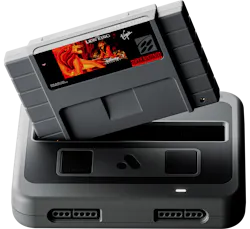 Analogue Super NT+
1. The Analogue Super NT+ brings back SNES and Famicom game playability. (Credit: Analogue)
Users can play over 2,200 game cartridges on this system, which delivers HDMI output at resolutions as high as 1080p. Bluetooth and 2.4-GHz wireless controller connectivity are also included. Analog DAC support is achieved through a USB-C power input and USB-A. The console expects to ship in December 2026.
Specifications:
- Altera Cyclone V FPGA
- Supports over 2,200 SNES and Super Famicom game cartridges
- HDMI output: 480p, 720p, 1080p (NTSC) 576p, 720p, and 1080p (PAL)
- 48-kHz, 16-bit HDMI audio
- 8:7, 4:3, and 1:1 aspect ratio
- HQ2x-HQ4x image scaling and adjustable scanlines (normal + hybrid, depth 0 - 255)
- SD card slot that supports FAT16 and FAT32
- Bluetooth and 2.4-GHz wireless controller compatibility. Also supports wired controller connectivity
- USB-C power input
- USB-A port for analog DAC
- Analog DAC for CRT and professional monitor
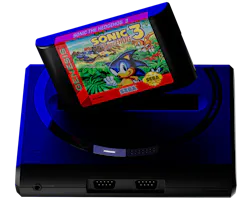 Analogue Sg+
2. Analogue introduced the Sg+ for users to play Sega games again. (Credit: Analogue)
There’s no limit to how much fun players will have with over 2,180 Sega games supported. It even works with HDMI output at 1080p resolution, along with 48-kHz, 16-bit stereo audio. Mega Sg+ also has Bluetooth, 2.4-GHz wireless controller connectivity, USB-C power, and Sega CD hardware support. Those interested won’t have to wait long, either, as it ships in December 2026.
Specifications:
- Altera Cyclone V FPGA
- Compatible with Sega Genesis, Sega Mega Drive, Sega Master System, Game Gear, Sega Mycard, Mark III, SG-1000, and SC-3000 via separately sold adapters
- HDMI output: 480p, 720p, and 1080p (NTSC) and 576p, 720p, and 1080p (PAL)
- 48-kHz, 16-bit stereo audio
- Selectable audio characteristics via various Sega hardware sound chips
- Aspect ratio: 8:7, 4:3, and 1:1
- HQ2x-HQ4x image scaling and adjustable scanlines
- Bluetooth and 2.4-GHz wireless controller compatibility; supports wired controller
- USB-C power input
- USB-A port for analog DAC and controller charging
- Hot-swappable cartridges
- Sega CD connector to connect a Sega CD or Mega CD
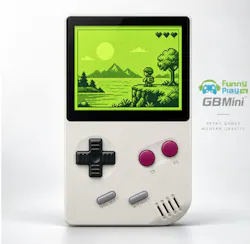 FunnyPlay handheld console
3. FunnyPlay released a replication of the Game Boy/Game Boy Color handheld console. (Credit: FunnyPlay)
Want to play with others? There’s a USB-C connection for multiplayer gaming via a link cable.
Specifications:
- Plays Game Boy and Game Boy Color cartridges via a 32-pin cartridge slot
- 2.98-in. HD IPS display (800x720 resolution and 16.7 million colors)
- 1,800-mAh rechargeable, removable lithium-polymer battery. Lasts 4 to 6 hours on a single charge
- USB-C charging (5 V/1 A). Takes 2.5 hours to fully charge.
- MicroSD expansion (up to 32 GB, FAT32). Supports game saves, screenshots, and firmware updates
- Built-in real-time clock (CR2032) for time-dependent game features
- Built-in speaker (0.5 W)
- ROM file support through microSD
- Multiplayer gaming and trading via USB-C link cable
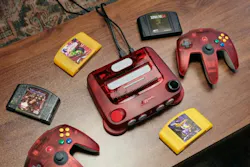 ModRetro M64
4. ModRetro M64 enables video game fanatics to play Nintendo 64 games. (Credit: ModRetro)
Local multiplayer is also supported via 4x controller ports. Expansion Pak functionality is included, too. Users can get firmware updates through Wi-Fi, and customization options include CRT filters and overclocking modes.
Specifications:
- AMD Artix Ultrascale+ FPGA
- HDMI: 720p, 1080p, 1440p, and 4K at 60 fps
- 48-kHz, 16-bit CD uncompressed PCM audio
- Region-free NTSC and PAL compatibility
- 4x low-latency PSRAM devices in the memory subsystem
- Pre-installed microSD card – 16GB
- Fanless thermal design
- Wi-Fi firmware updates/USB firmware updating
- 2x USB ports for charging M64 Pro Controllers
- CRT filters and overclocking modes
- Adjustable LED lighting under the cartridge slot
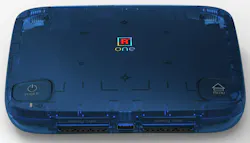 Retro Remake SuperStation One
5. Retro Remake’s SuperStation One is a multi-console platform. (Credit: Retro Remake)
Thanks to its MiSTer FPGA cores, the SuperStation One works for other gaming platforms like the Nintendo 64 and Sega Saturn. Along with VGA, the system has HDMI output (up to 1536p) and composite and component video connections. SNAC interfaces support PlayStation controllers and memory cards. Players can add a SuperDock to support an optical disk drive and an M.2 SSD.
Specifications:
- Intel Cyclone V SX FPGA
- Supports the PS One, Nintendo 64, Sega Saturn, NES, SNES, Genesis, and arcade systems.
- HDMI output up to 1536p/1440p
- Analog video outputs: VGA, composite/RCA, component, and RGB through DIN10
- Simultaneous digital and video output
- 3.5-mm analog audio and TOSLINK digital audio
- Pre-installed 64-GB microSD card
- Built-in Wi-Fi and Bluetooth
- Ethernet
- 3x USB-A ports and 1x USB-C port (power input)
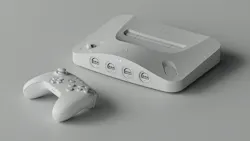 Analogue 3D
6. The perfect system for Nintendo 64 games! (Credit: Analogue)
The HDMI output reaches 4K, and the Original Display Modes reproduce the CRT appearance and professional video monitors, like scanlines, phosphor effects, and shadow masks. Players will notice smooth gameplay, achieved with the help of variable refresh rate. Controller ports (4x), built-in Expansion Pak and Controller Pak, Bluetooth, dual-band Wi-Fi, and a 16-GB SD card are included.
Specifications:
- Intel Cyclone 10 GX FPGA
- 4K and 1080p HDMI output
- 48-kHz, 16-bit PCM audio
- Variable refresh rate
- Supports original N64 cartridges
- Region-free NTSC and PAL support
- Original display modes to recreate CRT and professional video monitor (PVM/BVM) characteristics
- Bluetooth Classic and LE, dual-band Wi-Fi + OTA wireless 3DOS updating
- 2x USB-A ports (charging and wired), 1x USB-C power
- Pre-installed16-GB SD card
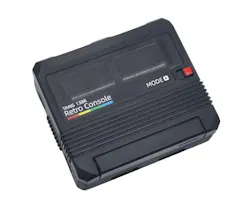 Sipeed Tang Retro
7. Sipeed’s Tang Retro console can play NES, SNES, GBA, Sega Genesis, and Sega Master System Games. (Credit: Sipeed)
An external storage loads the BIOS files, emulator cores, and games using USB OTG. Meanwhile, the Sipeed Tang Retro console features HDMI for video output and 2x USB-A ports for the controllers. This works as an FPGA debugging and development tool, too.
Specifications:
- GOWIN TangeMega 60K/TangeMega 138K
- Supports NESTang, SNESTang, GBATang, GBTang, SMSTang
- BL616 MCU running TangCore firmware for switching between emulator cores
- HDMI
- 2x USB-A ports for compatible controllers
- Supports PS2 controllers via a PMOD DS2x2 adapter
- Functions as an FPGA debugging and development tool
Source: Electronic Design