Smart homes and smart cities rely on a multitude of smart sensors and intelligent devices that continuously collect and process data to improve safety, energy efficiency, comfort, and urban resource usage. However, this ecosystem has placed a lot of pressure on the power management side. Smart devices are anticipated to become smaller, operate longer on limited energy sources, handle increasing processing workloads, and maintain continuous connectivity.
Power management ICs (PMICs) play a significant role in these designs. They are increasingly used for system management functions and AI-assisted decision-making capabilities beyond their original function of supplying multiple voltage rails. They sequence start-up behaviors, monitor battery health with high-precision fuel gauging, dynamically switch between primary and ambient energy sources, and throttle power rails per operational sleep states.
Five trends demonstrate how PMIC technology is responding to the requirements of smart home and smart city applications: ultra-low-power electronics, longer battery life, energy harvesting, autonomous sensing, and increasingly capable for edge AI infrastructure.
Ultra-low power enables always-on smart home devices
One of the most important trends in smart homes is the growing proliferation of always-on, battery-operated devices. Typical examples include motion sensors, air-quality monitors, smart locks, occupancy detectors, and wearable-connected home devices. Often, they must remain operational for years without requiring battery replacement.


To meet this requirement, PMICs need to provide low quiescent current and high conversion efficiency, even under light-load conditions. The latest generations of wireless protocols, such as Bluetooth Low Energy (LE), Thread, and Matter, have significantly contributed to reducing power consumption. Further power optimization can be achieved at the power conversion and distribution level, where PMICs become a critical factor in improving overall battery life.
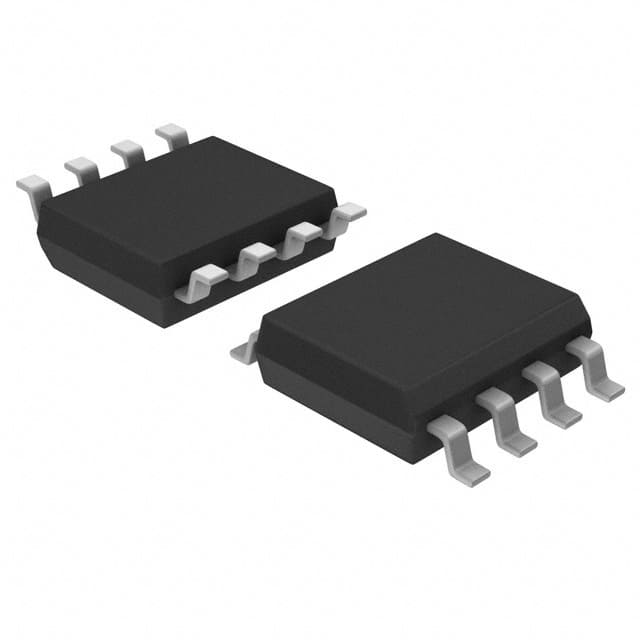
An example is the nPM1304, an ultra-low-power PMIC developed by Nordic Semiconductor for space-constrained battery-powered products. The device (Figure 1) integrates battery charging, buck regulators, low-dropout (LDO) functionality, battery monitoring, system management, watchdog features, an I2C-compatible two-wire interface, and five GPIOs. The supported battery chemistries include lithium-ion, lithium-polymer, and lithium iron phosphate.
The nPM1304 offers up to four regulated rails with two buck converters, each capable of up to 200 mA with efficiencies up to 93%, and two LDO regulators that can also be used as load switches. The charger can work with as little as 4 mA, which is important for cells that can take only a few milliamps. System management features include a long-button-press hard reset, failed-boot recovery for sealed products without a removable battery, a power-failure warning interrupt, an external watchdog, 500-nA hibernate, and 370-nA ship mode.
A unique feature is the fuel gauge. Instead of counting coulombs, Nordic’s algorithm combines voltage, current, and temperature measurements with a battery model included in the system-on-chip software to provide accurate measurements of state of charge and state of health for battery cells. For this feature, Nordic quotes 8 to 10 µA while active and 0 µA in sleep.

Intelligent energy management extends battery life
Closely related to ultra-low-power design, engineers are also looking to maximize battery lifetime in next-generation designs. Besides reducing quiescent current, modern PMICs are increasingly adopting advanced techniques to optimize energy utilization throughout the operating life of the system.
Smart home devices are often subject to dynamic workloads. A wireless occupancy sensor, for example, may remain asleep for long periods before waking up briefly to process data and transmit information. In these applications, intelligent energy management becomes as important as standby current.
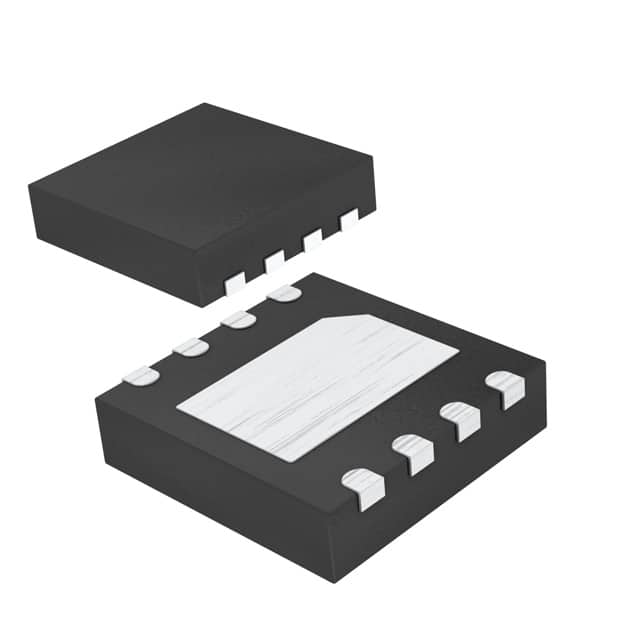
Nordic’s nPM2100 is a good example of a PMIC designed for primary-cell-powered devices. It works with any primary (non-rechargeable) battery from 0.7- to 3.4-V input voltage and provides an output voltage of 1.8 to 3.3 V. Quiescent current is rated at 150 nA, while ship mode drops to 35 nA.
The PMIC integrates a highly efficient boost regulator achieving an output current of 150 mA, and it can maintain excellent conversion efficiency even under low-current operating conditions (up to 95% at 50 mA and 90.5% at 10 µA).
An automatic pass-through mode lets the cell be drawn down to its functional endpoint. A 50-mA LDO/load switch provides a second rail, and a proper selection of the boost regulator input and output capacitors allows the PMIC to support short, high-peak bursts, such as a Bluetooth LE transmit event, without stressing the battery.
Like the nPM1304, the PMIC also incorporates a model-based fuel-gauging functionality and ultra-low-power operating modes that enable significant battery-life extension. In its launch announcement, Nordic claims battery-life gains of roughly 2× at 9-minute wake-up intervals and 3× at 60-minute intervals.
Battery lifetime is a critical issue for the smart city deployment of thousands of distributed nodes. Changing batteries in environmental sensors, parking monitors, asset trackers, or occupancy detectors can be a big operating expense. An additional month or year of battery life means lower maintenance costs and better sustainability of the system.
Energy harvesting enables maintenance-free sensors
The ability to scavenge usable energy from ambient sources such as light, vibration, temperature gradients, or RF signals has been a long-standing objective of smart device designers. The latest PMIC innovations are making this vision technically feasible.
Energy harvesting is a solution for one of the biggest barriers to widespread sensor deployment in smart cities: maintenance. It allows a self‑powered sensor to run for years, giving infrastructure operators the freedom to deploy many monitoring nodes without the constant burden of battery replacement.
For example, a solar cell in an office light produces microwatts. The same solar cell outside can create much more power. A power management chip set up for one kind of light doesn’t work well in other types. Solar cells that work both indoors and outdoors fix this problem.
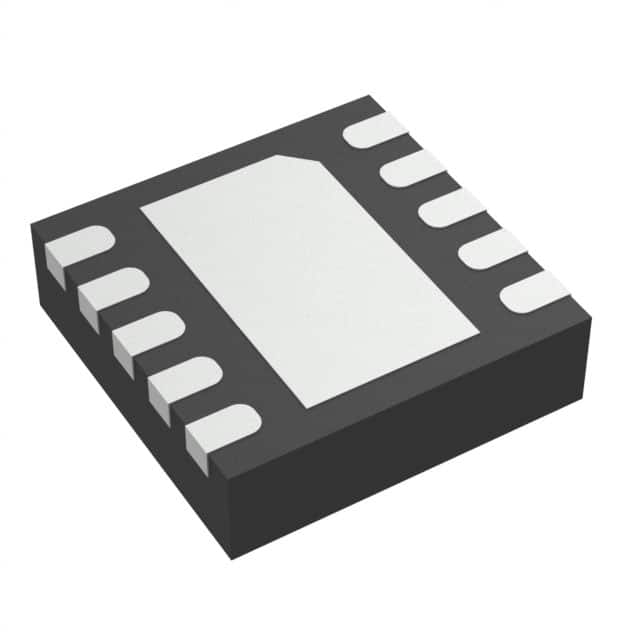
One of the most interesting recent developments is e-peas’s AEM15820 energy-harvesting PMIC (Figure 2). It is designed for hybrid photovoltaic energy-harvesting systems capable of operating across a wide range of lighting conditions. It supports indoor and outdoor energy sources, integrates advanced maximum-power point tracking (MPPT), and can efficiently manage power derived from illumination levels from microwatts to multiple watts.
Two boost converters, one for low power and the other for high power, are selected automatically according to the available input energy, while the MPPT supports open-circuit-ratio and constant-voltage modes. The AEM15820 cold-starts from 1.5 µW at 275 mV, harvests from 300 mV once running, and extracts up to 1 A from the source, with source efficiency reaching 97%.
The output covers 0.6 to 3.3 V at up to 100 mA, with protection against overcharge and over-discharge of the storage element, all in a 5 × 5-mm QFN40 package. The low cold-start power threshold allows the IC to wake up and initiate energy harvesting even when the input voltage from the transducer is measured in hundreds of millivolts or microamps.
Hybrid photovoltaic technology works under normal indoor lighting conditions in homes, offices, shopping centers, and public buildings. This means devices such as occupancy sensors, environmental monitors, smart controls, electronic labels, and wireless switches will be increasingly capable of running with little or no dependency on disposable batteries.

Multi-rail PMICs power autonomous smart sensors
While many smart home devices focus on low-power use, smart city systems need more local processing power. Edge computing platforms, intelligent gateways, machine-vision systems, and AI-driven industrial controllers must handle large amounts of data. At the same time, they must operate within strict energy-efficiency limits.
This demands advanced PMICs compared with the less complex sensor nodes. These systems require voltage rails to power diverse components, current outputs to sustain high-power operations, and accurate sequencing of power-on and power-off phases. The monitoring functions are needed to monitor the real-time performance, and the dynamic voltage adjustment capability makes sure that the system works efficiently under variable loads.
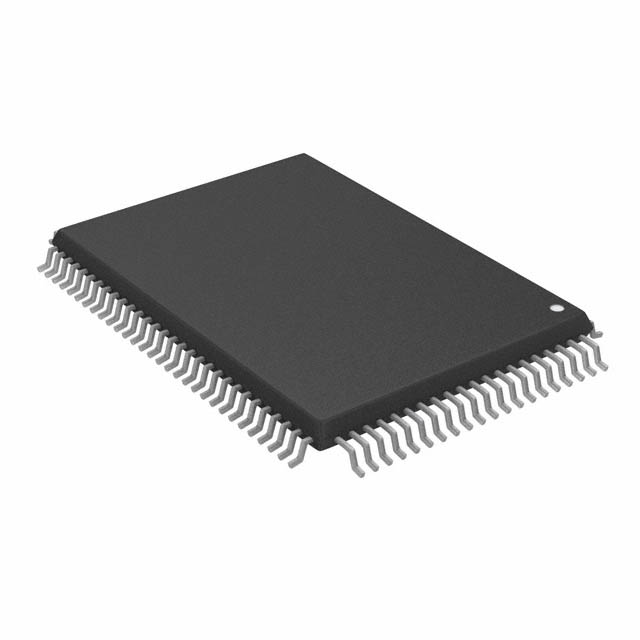
Microchip Technology Inc.’s MCP16701 PMIC (Figure 3) is a suitable solution. Tailored for high-performance processors and FPGAs, the device integrates eight 1.5-A buck converters (that can be paralleled), four 200-mA LDOs, and a controller to drive external MOSFETs, all configured over an I2C interface.
The PMIC also supports dynamic output-voltage adjustment (converters and LDOs can be programmed between 0.6 and 1.6 V with a resolution down to 12.5 mV), enabling designers to optimize system power consumption according to workload requirements. Microchip claims a 48% area reduction with less than 60% of the components in a discrete solution.
Paralleling is a key feature. When an FPGA core demands more current, several bucks can be assigned to a single rail, while the others serve DDR, I/O, and auxiliary supplies. According to Microchip, the MCP16701 is suitable for industrial computing, data centers, IoT, and edge AI. In a smart city architecture, such as a traffic-monitoring unit, an environmental gateway aggregating several sensors, or an industrial camera, it can be located at the hub where decisions are made.

PMICs for AI-driven infrastructure
Real-time computer vision, speech processing, acoustic anomaly detection, and ML algorithms are increasingly used in smart cities and advanced smart home hubs to monitor and analyze traffic flows. This creates a big challenge for power delivery to perform inference at the edge.
Edge AI processors require high currents, often ranging from several amperes to tens of amperes, at low core supply voltages (frequently below 1.0 V). Furthermore, dynamic inference workloads can cause sudden load transients. This requires core supply rails to step from idle to multi-ampere peak loads within nanoseconds without causing overshooting. High efficiency over the full load range is also required to minimize thermal dissipation in fanless and sealed enclosures, such as those deployed in outdoor utility installations.
Nexperia’s NEH71x0 energy-harvesting PMIC family (the NEH7100BU and NEH7110BU) integrates advanced power management intelligence and MPPT functionality to maximize harvested energy under changing environmental conditions.
The inductor‑less topology saves board area and reduces bill-of-materials costs. The on‑chip hill‑climbing MPPT re‑optimizes every 0.5 seconds, which is suitable for rapidly changing conditions. This device harvests power from 15 µW to 100 mW with up to 95% efficiency.
The family can use light, movement, pressure, and heat as power sources. It can charge storage devices up to 4.5 V. Storage parts can be lithium batteries, supercapacitors, or hybrid supercapacitors. The design includes an LDO, USB charging, and protection for the storage and can start up when there is no power. The NEH7100BU also has a digital I2C interface, which allows users to set up the device and acquire the readings. This helps the software to adjust how often the system operates, based on the energy it has.
Source: EDN